







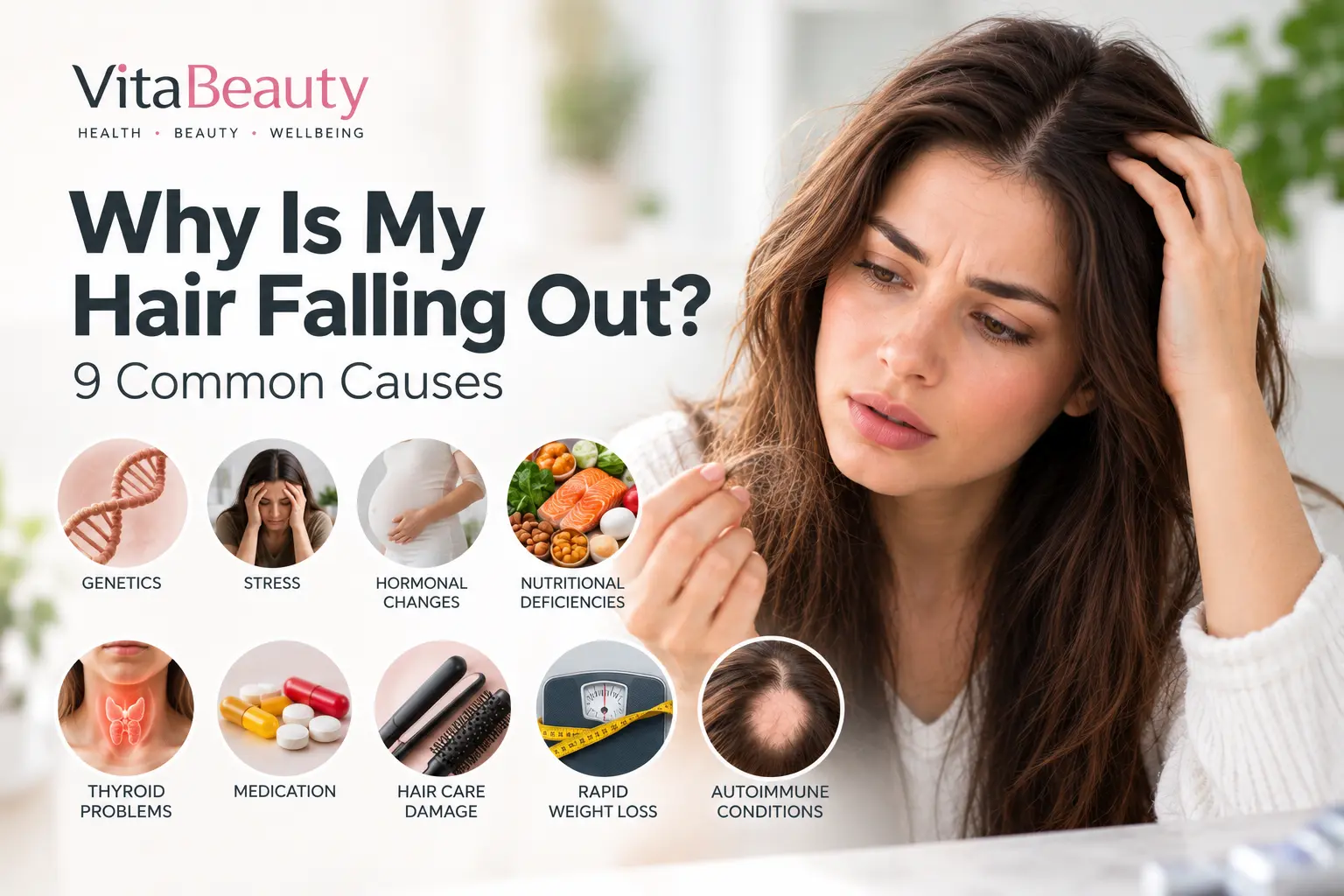
Why Is My Hair Falling Out? 9 Common Causes
Noticing more hair than usual on your pillow, in the shower or on your hairbrush can be worrying. You might wonder whether you are experiencing normal shedding, temporary hair loss or the early signs of a condition that needs treatment. The good news is that hair loss has many possible causes, and some forms can improve once the underlying problem is addressed.
If you are asking, “Why is my hair falling out?”, the answer depends on several factors, including your age, family history, recent health changes, diet, hormonal health and hair care habits.
It is normal to lose around 50 to 100 hairs a day as part of the natural hair growth cycle. However, noticeably increased shedding, a widening parting, bald patches or progressive thinning may indicate something more than everyday hair renewal.
In this guide, we explore nine common causes of hair loss, how to recognise potential warning signs, and when to seek professional advice.
What Does Hair Loss Look Like?
Hair loss does not look the same for everyone. Some people notice large amounts of shedding, while others experience gradual thinning over several months or years.
Common signs include:
- More hair than usual on your brush, pillow or clothing.
- A wider parting or a more visible scalp.
- A smaller ponytail or less overall hair volume.
- A receding hairline or thinning around the temples.
- One or more round or irregular bald patches.
- Short, broken strands that make the hair appear uneven.
- Changes in the scalp, such as redness, scaling, tenderness or itching.
It is important to distinguish hair loss from hair breakage. Hair loss involves shedding or loss of hair from the follicle, while breakage happens when strands snap along their length. Both can make your hair appear thinner, but they may require different approaches.
Read our guide to hair loss vs hair breakage to understand the difference.
1. Genetic Hair Loss
Genetic hair loss, also called androgenetic alopecia or pattern hair loss, is one of the most common causes of progressive thinning.
In women, it often develops gradually. You may notice that your parting becomes wider, your crown looks thinner or your overall hair density decreases. In men, a receding hairline or thinning around the crown is common.
Genetic hair loss can develop with age, although it may begin earlier in some people. Having relatives with pattern hair loss can increase your likelihood of experiencing it, but family history does not tell the whole story.
Can genetic hair loss be treated?
There are treatments that may help slow progression or encourage regrowth in certain cases. For example, topical minoxidil is used for some types of pattern hair loss.
However, treatment suitability depends on your diagnosis, medical history and individual circumstances. It is best to seek advice from a GP, dermatologist or pharmacist before starting a treatment.
The earlier the cause is identified, the sooner you can explore appropriate options. For more background, read our article on hair loss in women.
2. Stress and Emotional Pressure
Stress can affect the body in several ways, and significant physical or emotional stress may trigger a type of hair shedding known as telogen effluvium.
This happens when more hairs than usual enter the resting phase of the hair growth cycle and subsequently shed. It can occur after a major life event, prolonged stress, surgery or a serious illness.
One important clue is timing: increased shedding may become noticeable a few months after the triggering event rather than immediately.
What can help?
If stress has contributed to your hair loss, reducing ongoing stress and supporting your general health may help. Try to maintain regular meals, sufficient sleep and manageable daily routines.
However, do not automatically assume that stress is the cause. Other conditions can produce similar symptoms, and more than one factor may be involved.
If shedding is severe, continues for a prolonged period or is accompanied by other symptoms, speak to a healthcare professional.
3. Hormonal Changes
Hormones influence the hair growth cycle, which means changes in hormone levels can affect hair density and shedding.
Common situations associated with hormonal changes include:
- Pregnancy and the months following childbirth.
- Perimenopause and menopause.
- Certain hormonal conditions, including polycystic ovary syndrome (PCOS).
- Changes involving some hormonal contraceptives.
Hair loss after pregnancy
Many women experience increased shedding in the months after giving birth. This can happen as the hair growth cycle adjusts following pregnancy.
Postpartum shedding often improves over time, although the amount of shedding and recovery period vary. If you develop bald patches, significant scalp symptoms or persistent thinning, seek medical advice rather than assuming it is simply postpartum hair loss.
Hair thinning during menopause
Some women notice gradual thinning during perimenopause or menopause. Hormonal changes may contribute, but age-related changes and genetic factors can also play a role.
If hair thinning occurs alongside irregular periods, new facial hair growth, acne or other hormonal symptoms, a GP can help assess whether further investigation is appropriate.
4. Nutritional Deficiencies and Restrictive Diets
Your hair needs adequate nutrition to grow normally. Insufficient intake of certain nutrients, including iron and protein, can contribute to hair loss.
Nutritional issues may be more likely if you follow a highly restrictive diet, have experienced substantial weight loss, struggle to eat enough or have a condition that affects nutrient absorption.
Nutrients associated with hair health
Iron: Low iron levels may contribute to hair loss in some people. Iron deficiency can occur for several reasons, including heavy menstrual bleeding or inadequate dietary intake.
Protein: Hair is primarily made of a protein called keratin. Consistently eating too little protein can affect normal hair growth.
Zinc: Zinc is essential for normal bodily functions, including those involved in tissue growth and repair. Deficiency can contribute to hair problems.
Other vitamins and minerals: Various nutrients support normal health, but taking extra amounts does not necessarily improve hair growth if you already get enough.
Should you take supplements?
Not everyone with thinning hair needs a hair supplement. Taking high doses of nutrients without a demonstrated need can be ineffective and, in some cases, harmful.
A GP may recommend blood tests if your symptoms or medical history suggest a deficiency. If a deficiency is identified, treatment can be tailored to your needs.
Learn more in our guides to vitamins for hair growth and hair growth supplements.
5. Thyroid Problems and Other Medical Conditions
The thyroid gland helps regulate several processes in the body, including metabolism. An underactive or overactive thyroid can sometimes be associated with changes in hair texture, thinning or increased shedding.
Other medical conditions can also affect hair growth. These may include autoimmune conditions, scalp disorders and illnesses that place significant stress on the body.
For example, alopecia areata is an autoimmune condition in which the immune system attacks hair follicles. It often causes distinct patches of hair loss, although the pattern can vary.
Scalp infections and inflammatory conditions can also cause hair loss, particularly when they produce redness, scaling or broken hairs.
When should you investigate a medical cause?
Consider speaking to your GP if hair loss is unexplained, persistent or accompanied by symptoms such as unusual fatigue, changes in weight, feeling unusually hot or cold, or changes in your general health.
Your GP may examine your scalp, review your medical history and medications, and recommend blood tests where appropriate. Not everyone needs the same tests, so assessment should be guided by your symptoms.
6. Medication and Medical Treatments
Hair loss can sometimes occur as a side effect of medication or medical treatment.
Certain medicines may affect the hair growth cycle, while chemotherapy is a well-known cause of hair loss. The type and severity of hair changes depend on the treatment and the individual.
If you suspect that a medication is contributing to your hair loss, do not stop taking it on your own. Contact the prescribing healthcare professional to discuss your concerns and whether an alternative may be suitable.
It can help to record when you started a medicine and when the shedding began. This information may help your clinician assess whether there is a possible connection.
Hair loss associated with medical treatment may be temporary in some circumstances, but recovery varies. Ask your healthcare team what to expect in your specific situation.
7. Tight Hairstyles and Hair Care Damage
Your hair care habits can contribute to thinning, particularly when they repeatedly place stress on the hair shaft or follicles.
Traction alopecia
Traction alopecia develops when repeated pulling places tension on the hair follicles. It may be associated with tight ponytails, buns, braids, extensions or other styles that pull firmly on the hairline.
Early signs may include tenderness, broken hairs or thinning around the temples and forehead. If the pulling continues for a long time, the damage can become permanent.
Heat and chemical damage
Frequent use of straighteners, curling irons, harsh chemical treatments and aggressive brushing can weaken hair strands. This often causes breakage rather than true shedding from the follicle, but it can still make hair look noticeably thinner.
To protect your hair:
- Choose loose hairstyles that do not pull on the roots.
- Reduce frequent high-heat styling.
- Use conditioner to improve manageability.
- Detangle gently, especially when your hair is wet.
- Avoid treatments that leave your scalp irritated or painful.
These habits can reduce avoidable damage, but they will not treat every underlying cause of hair loss.
8. Rapid Weight Loss or Not Eating Enough
Hair growth may be affected when the body does not receive enough energy or essential nutrients.
A very restrictive diet, rapid weight loss or a prolonged period of inadequate food intake can trigger increased shedding. This may occur even when someone initially feels otherwise well.
If you are trying to lose weight, a balanced and sustainable approach is preferable to extreme restriction. Include a variety of foods that provide protein, iron and other essential nutrients.
If you have lost a substantial amount of weight unintentionally, or your eating habits have changed significantly, speak to a healthcare professional. They can help investigate the cause and determine whether nutritional support is needed.
9. Autoimmune Conditions and Patchy Hair Loss
Alopecia areata is an autoimmune condition that can cause hair to fall out in round or oval patches. It may affect the scalp, eyebrows, eyelashes or other areas of the body.
The course of the condition varies. Some people experience regrowth, while others develop additional patches or more extensive hair loss.
Not every bald patch is caused by alopecia areata. Fungal infections, inflammatory conditions and other forms of hair loss can produce similar changes.
Seek medical advice if you notice sudden bald patches, eyebrow or eyelash loss, or scalp symptoms such as redness, pain or scaling. Early assessment can help identify the cause and guide treatment.
How Can You Tell Whether Your Hair Loss Is Temporary?
The pattern of hair loss can offer clues, but it cannot confirm the cause on its own.
Temporary shedding may occur after childbirth, a significant illness, surgery, a stressful period or rapid weight loss. When the trigger resolves, shedding may gradually decrease and hair density may recover.
Genetic pattern hair loss usually develops more gradually and may continue without treatment. Some inflammatory or scarring conditions require prompt assessment because lasting damage to hair follicles can occur.
Consider these questions:
- Did the shedding begin suddenly or gradually?
- Was there an illness, major stressor, pregnancy or dietary change a few months earlier?
- Is the hair thinning evenly, or are there distinct bald patches?
- Are you noticing broken strands or hairs shedding from the roots?
- Do you have scalp pain, itching, redness or scaling?
- Have you recently started a new medication?
Write down your observations before an appointment. They may help your GP understand the pattern and decide what to investigate.
What Should You Do If Your Hair Is Falling Out?
If you are concerned about hair loss, the most useful first step is to identify the likely cause rather than buying several products at once.
Step 1: Review recent changes
Think about illness, stress, childbirth, weight changes, dietary restrictions, new medicines and changes in your hair care routine.
Step 2: Adopt gentle hair care habits
Use suitable shampoo and conditioner, avoid hairstyles that pull, and reduce excessive heat and chemical treatments. These measures can help minimise damage, even if they do not address the underlying cause.
Step 3: Avoid unproven miracle cures
Be cautious of products promising guaranteed regrowth or immediate results. Supplements, shampoos and oils do not work for every type of hair loss.
Step 4: Seek professional advice
In the UK, your GP is a sensible starting point if you are worried about persistent or unexplained hair loss. They can assess your symptoms and discuss whether tests or referral to a dermatologist are appropriate.
The NHS advises people who are concerned about hair loss to see a GP before considering a commercial hair clinic.
Step 5: Follow a treatment plan suited to the cause
Depending on the diagnosis, treatment may involve correcting a deficiency, treating a scalp condition, reviewing medication or using a treatment such as minoxidil for an appropriate type of hair loss.
There is no single treatment that works for everyone. Results and recovery times depend on the underlying condition.
Frequently Asked Questions
1. Is it normal to lose hair every day?
Yes. Losing around 50 to 100 hairs a day is generally considered normal. However, noticeably increased shedding, progressive thinning or bald patches may need assessment.
2. Why is my hair falling out more than usual?
Possible causes include stress, illness, hormonal changes, genetic hair loss, nutritional deficiencies, medication and damaging hair care practices. The timing and pattern of shedding can help a healthcare professional investigate the cause.
3. Can stress cause hair loss?
Yes. Significant physical or emotional stress can trigger temporary increased shedding in some people. The shedding may become noticeable a few months after the stressful event, and recovery varies.
4. Which vitamin deficiency causes hair loss?
Deficiencies involving iron and certain other nutrients can contribute to hair loss. However, there is no single deficiency responsible for every case. A healthcare professional can advise whether testing is appropriate.
5. Can hair grow back after falling out?
Sometimes. Hair may regrow when temporary shedding settles or an underlying cause is treated. Other conditions, including some forms of genetic or scarring hair loss, may require ongoing treatment and may not fully reverse.
6. Does shampoo stop hair loss?
A suitable shampoo can keep the scalp clean and help reduce damage, but ordinary cosmetic shampoos do not treat every cause of hair loss. Persistent thinning may need medical assessment and a targeted treatment plan.
7. When should I see a GP about hair loss?
See a GP if you are worried about your hair loss, particularly if it is sudden, persistent, patchy or accompanied by scalp symptoms or other changes in your health.
8. Are hair growth supplements worth taking?
Supplements may be useful when they correct a genuine nutritional deficiency, but they are not guaranteed to stimulate growth. Taking excessive amounts of some nutrients can be harmful, so seek advice before starting high-dose supplements.
Final Thoughts
If you are wondering why your hair is falling out, remember that hair loss can have many different causes. Genetics, stress, hormonal changes, nutritional deficiencies, medical conditions and hair care damage can all play a role.
A gentle routine and a balanced diet can help support hair health, but they cannot replace diagnosis when hair loss is persistent or unexplained. Rather than relying on miracle products, focus on understanding the cause and choosing an appropriate approach.
If you notice sudden shedding, bald patches or continuing thinning, seek advice from your GP. With the right assessment, you can better understand your options and make informed decisions about your hair care.
Medical disclaimer: This article is for general educational purposes only and does not replace professional medical advice, diagnosis or treatment.
Medical sources
- NHS — Hair loss
- American Academy of Dermatology — 18 causes of hair loss
- American Academy of Dermatology — Hair loss diagnosis and treatment
- American Academy of Dermatology — Tips for managing hair loss


