







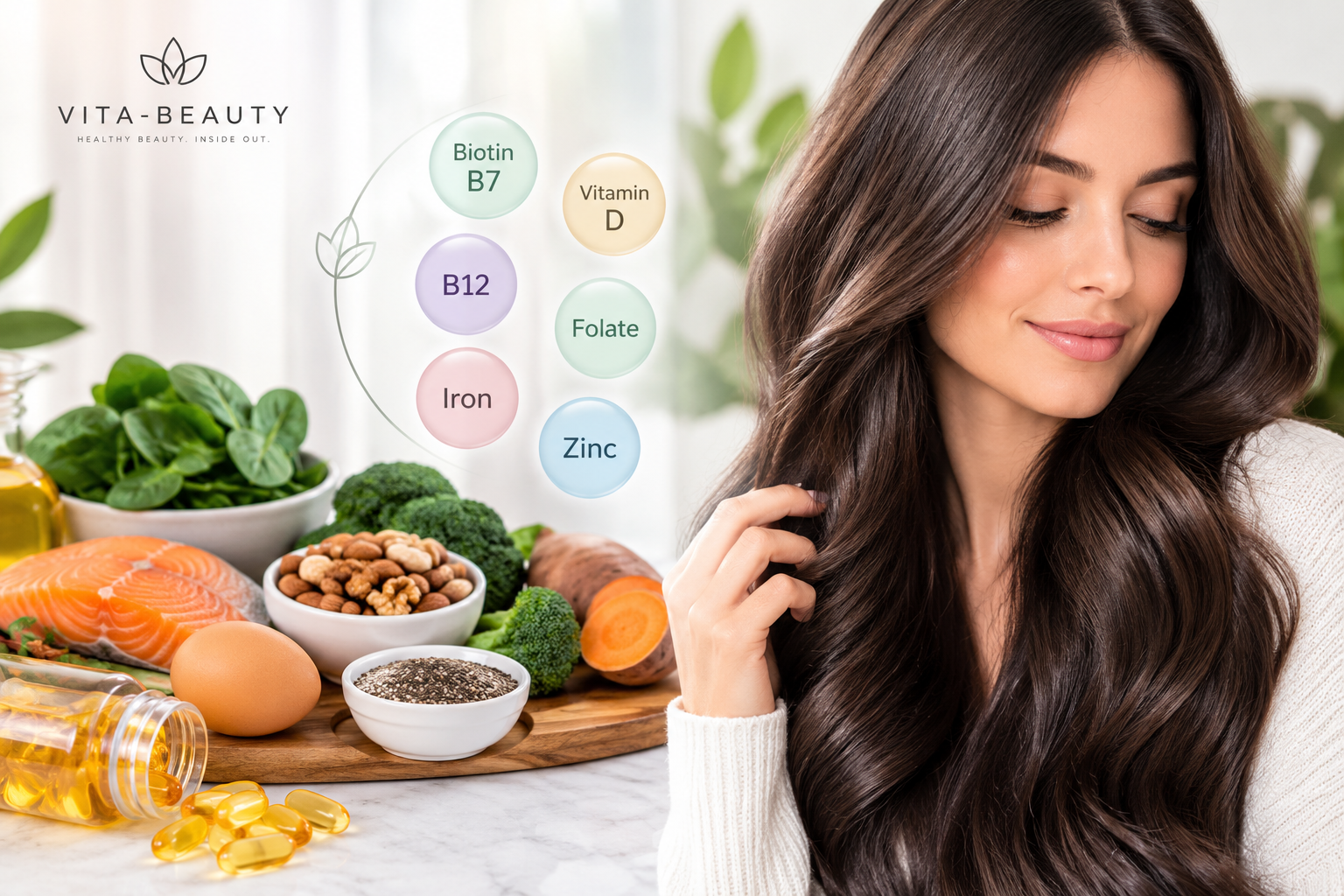
Vitamins for Hair Growth: A Guide to Key Nutrients
Healthy-looking hair starts with more than the products you use on the outside. Your diet and overall nutritional status can also play an important role in maintaining normal hair health.
This is one reason vitamins for hair growth have become such a popular topic. From biotin and vitamin D to iron, zinc and other nutrients, there are many ingredients marketed specifically for people concerned about thinning hair or increased shedding.
But there is an important distinction between supporting normal nutrition and treating hair loss.
Some nutritional deficiencies can contribute to hair problems, while taking additional vitamins when you already have adequate levels may not improve hair growth. In some cases, excessive intake of certain nutrients can even be harmful.
So, which vitamins and nutrients actually matter for your hair?
This guide explains the key nutrients associated with normal hair health, where to find them in food, when supplements may be appropriate and what to consider if you are experiencing persistent hair loss.
Can Vitamins Affect Hair Growth?
Nutrition and hair health are closely connected.
Hair follicles are active structures that require energy and nutrients to function normally. If your body is not receiving enough of certain nutrients, hair growth and shedding can sometimes be affected.
However, this does not mean that taking large amounts of vitamins will automatically make your hair grow faster.
The American Academy of Dermatology recommends finding the underlying cause of hair loss and using supplements such as biotin, iron or zinc when testing shows a deficiency. Taking unnecessary supplements can sometimes cause harm.
This is particularly important because hair loss can have many causes, including genetics, hormonal changes, illness, stress, nutritional deficiencies and certain medical conditions.
If you want to understand the different causes of female hair loss, read our guide to Hair Loss in Women: Common Causes and What You Can Do.
Important Vitamins and Nutrients for Hair Health
There is no single vitamin that works for everyone.
Instead, several vitamins and minerals contribute to normal nutrition and may be relevant when a person has an inadequate intake or deficiency.
1. Biotin
Biotin is one of the most commonly associated nutrients when people search for vitamins for hair growth.
Also known as vitamin B7, biotin helps the body convert carbohydrates, fats and proteins from food into energy.
Biotin deficiency can cause hair thinning and loss of body hair. However, biotin deficiency is considered rare in people eating a normal mixed diet.
This means that taking high-dose biotin is not automatically necessary simply because you are experiencing hair thinning.
The NIH Office of Dietary Supplements notes that there is limited scientific evidence supporting biotin supplementation for improving hair health in people who are not deficient.
Foods containing biotin
Biotin can be found in foods including:
- Eggs
- Fish
- Meat
- Nuts
- Seeds
- Spinach
- Broccoli
- Sweet potatoes
A varied diet can provide biotin naturally.
Important note about high-dose biotin
High-dose biotin supplements can interfere with certain laboratory tests.
This can include some tests used to measure hormones, including thyroid-related tests. If you take a supplement containing a high amount of biotin, tell your healthcare professional before having blood tests.
2. Vitamin D
Vitamin D is another nutrient frequently discussed in relation to hair health.
Research has investigated associations between vitamin D status and different forms of hair loss. However, hair loss has many possible causes, and low vitamin D should not automatically be assumed to be the reason someone is losing hair.
If you are concerned about vitamin D levels, a healthcare professional can advise whether testing is appropriate.
Rather than choosing a high-dose vitamin D supplement specifically because you are experiencing hair loss, consider your overall nutritional needs.
3. Vitamin B12
Vitamin B12 is important for normal red blood cell formation and nervous system function.
It is naturally found in foods such as:
- Meat
- Fish
- Eggs
- Milk
- Other dairy products
Some fortified foods also contain vitamin B12.
People following vegan or highly restricted diets may need to pay particular attention to their B12 intake.
However, taking extra B12 does not automatically mean your hair will grow faster. The relevance of B12 supplementation depends on your individual nutritional status.
If you suspect that your diet may not provide enough B12, speak with a healthcare professional or qualified nutrition professional.
4. Folate and Folic Acid
Folate is another B vitamin involved in important processes within the body.
Folic acid is the form of folate commonly used in supplements and fortified foods.
Because folate is involved in cell division and other essential processes, adequate intake is important for overall health.
Some hair supplements include folic acid alongside other B vitamins, minerals and nutrients.
However, there is no reason to assume that taking high doses will automatically improve hair growth if your nutritional intake is already adequate.
5. Vitamin C
Vitamin C is best known for its role in normal immune function and antioxidant activity.
It also helps the body absorb iron from plant-based foods.
This is particularly relevant because iron status can be important when investigating certain types of hair shedding.
Good dietary sources of vitamin C include:
- Oranges
- Kiwi fruit
- Strawberries
- Peppers
- Broccoli
- Tomatoes
- Brussels sprouts
Getting enough vitamin C through a balanced diet can support normal nutritional health.
It should not, however, be viewed as a standalone treatment for hair loss.
6. Vitamin A
Vitamin A is essential for normal vision, immune function and other biological processes.
However, vitamin A is an excellent example of why more is not always better.
The American Academy of Dermatology warns that excessive amounts of certain nutrients, including vitamin A, have been linked with hair loss.
This is why taking several supplements at the same time can be problematic.
For example, if a multivitamin already contains vitamin A and you also take a separate beauty supplement, your total intake could become unnecessarily high.
Always check the full ingredient list before combining supplements.
7. Vitamin E
Vitamin E is an antioxidant nutrient found naturally in foods such as nuts, seeds and vegetable oils.
It is often included in beauty-focused supplements because of its antioxidant properties.
However, there is no simple rule that taking more vitamin E will result in faster hair growth.
As with other nutrients, an appropriate dietary intake is generally more important than taking high doses without a demonstrated need.
The American Academy of Dermatology also lists excessive intake of vitamin E among nutrient excesses that may contribute to hair loss.
8. Iron
Although iron is a mineral rather than a vitamin, it deserves particular attention when discussing hair health.
Iron deficiency can be associated with hair loss. The NHS lists hair loss among possible symptoms of iron-deficiency anaemia.
Women who have heavy periods may be at increased risk of iron deficiency, although there can be many different reasons for low iron.
If you think you may have an iron deficiency, it is better to speak with a healthcare professional rather than simply starting an iron supplement.
Too much iron can be harmful, and the American Academy of Dermatology recommends iron supplementation when testing shows that a person is deficient.
Foods rich in iron
Dietary sources include:
- Red meat
- Poultry
- Fish
- Beans
- Lentils
- Leafy green vegetables
- Fortified cereals
- Nuts and seeds
Vitamin C-rich foods can also help the body absorb non-haem iron from plant foods.
9. Zinc
Zinc is an essential mineral involved in many processes within the body.
Low zinc levels can be associated with hair loss in some circumstances.
However, taking additional zinc when your nutritional intake is already adequate is not necessarily beneficial.
The American Academy of Dermatology recommends zinc supplementation when testing shows a deficiency rather than taking it routinely for hair growth.
Food sources include:
- Meat
- Shellfish
- Dairy products
- Eggs
- Beans
- Nuts
- Seeds
- Whole grains
10. Protein
Protein is not a vitamin or mineral, but it is extremely important when discussing hair nutrition.
Hair is largely made from a protein called keratin.
A diet that provides inadequate protein or very low calorie intake can contribute to significant hair loss. The American Academy of Dermatology specifically identifies insufficient protein and very low calorie intake as possible contributors.
Good protein sources include:
- Eggs
- Fish
- Chicken
- Lean meat
- Greek yoghurt
- Cottage cheese
- Lentils
- Beans
- Tofu
- Nuts and seeds
A balanced diet containing sufficient protein can therefore be an important foundation for healthy-looking hair.
What Happens If You Are Deficient in a Nutrient?
A deficiency does not always produce obvious symptoms immediately.
Depending on the nutrient and severity of the deficiency, you may experience changes in energy, skin, nails or hair.
Hair shedding can sometimes occur alongside nutritional deficiencies, but hair loss alone cannot tell you which nutrient is missing.
For example, iron deficiency can be associated with hair loss, but hair loss can also occur because of stress, illness, hormonal changes or genetic factors.
This is why testing and professional assessment can be more useful than guessing.
The American Academy of Dermatology notes that if a dermatologist suspects a vitamin deficiency, hormone imbalance or another medical cause, blood tests may be used to investigate further.
Should You Take Vitamins for Hair Growth?
Not necessarily.
If your diet already provides adequate nutrients and you do not have a deficiency, taking additional vitamins may not solve the reason behind your hair loss.
For example, biotin is often marketed heavily for hair health, but the NIH notes that there is little scientific evidence supporting biotin supplements for hair improvement in people without deficiency.
Instead of asking:
“Which vitamin will make my hair grow?”
A better question may be:
“Why is my hair changing, and am I getting the nutrients I actually need?”
That shift can help you make a more informed decision.
Vitamins vs Hair Growth Supplements
There is an important difference between individual vitamins and complete hair supplements.
A single-nutrient supplement may provide a relatively high dose of one vitamin or mineral.
A multi-ingredient hair supplement may combine:
- Vitamins
- Minerals
- Amino acids
- Botanical ingredients
- Antioxidants
- Other nutritional compounds
The formula and dosage can vary considerably between products.
If you are considering a hair supplement, compare the complete ingredient list rather than choosing based only on one headline ingredient.
You can also read our related guide:
Hair Growth Supplements: What Ingredients Should You Look For?
How to Get Hair-Friendly Nutrients From Food
For most people, food should be the foundation of a balanced nutritional intake.
Instead of focusing on one “hair vitamin”, aim for variety.
Build meals around protein
Include foods such as eggs, fish, poultry, dairy products, beans, lentils or tofu.
Add colourful fruit and vegetables
Different fruits and vegetables provide different vitamins, minerals and other nutrients.
Include nuts and seeds
Nuts and seeds can provide nutrients including vitamin E, zinc and other minerals.
Choose whole grains
Whole grains can contribute several vitamins and minerals to your overall diet.
Avoid extreme diets
Very low-calorie diets and significant dietary restriction can contribute to hair shedding.
If you are planning significant weight loss or following a restrictive diet, professional nutritional guidance can be useful.
Can Taking Too Many Vitamins Cause Hair Loss?
Yes, in some circumstances.
This is one of the most important points to understand when choosing vitamins for hair growth.
The American Academy of Dermatology notes that excessive amounts of nutrients such as selenium, vitamin A and vitamin E have been linked with hair loss.
Taking several supplements simultaneously can increase the risk of exceeding recommended amounts.
For example, you might take:
- A multivitamin
- A hair supplement
- A separate biotin supplement
- A vitamin D supplement
- A beauty supplement
Without checking the labels, you may unknowingly duplicate ingredients.
Always check the total amount you are consuming.
What About Biotin for Hair?
Biotin deserves special attention because it is one of the most heavily marketed ingredients in hair supplements.
Biotin is essential for normal metabolism, and severe deficiency can cause hair loss. But deficiency is rare, and the NIH states that there is limited evidence supporting biotin supplements for hair health in people who are not deficient.
Therefore, if you see a product containing an extremely high dose of biotin, do not assume that the higher dose makes it more effective.
If you take high-dose biotin, remember that it can also interfere with some laboratory tests.
When Should You Speak to a Healthcare Professional?
Consider getting professional advice if your hair loss is:
- Sudden
- Rapidly worsening
- Severe
- Occurring in clearly defined patches
- Accompanied by scalp pain or inflammation
- Associated with other unexplained symptoms
- Continuing for an extended period
The NHS recommends speaking with a GP if you are concerned about hair loss.
A healthcare professional can consider your medical history, diet, symptoms and hair-loss pattern and determine whether further investigation is appropriate.
If a nutritional deficiency is suspected, testing may help identify whether supplementation is actually needed.
A Simple Checklist Before Buying Hair Vitamins
Before purchasing a product, ask yourself:
1. What am I trying to address?
Are you experiencing shedding, breakage, gradual thinning or another change?
2. Have I considered the possible cause?
Hair loss can have many causes, and vitamins are not a universal solution.
3. What does the product actually contain?
Read the full ingredient list and amounts.
4. Am I already taking another supplement?
Check for duplicated ingredients.
5. Is the dosage appropriate?
Avoid assuming that a higher dose will produce better results.
6. Do I need professional advice?
If hair loss is persistent or unexplained, consider speaking with a GP or dermatologist.
Final Thoughts
The search for the best vitamins for hair growth can lead to a huge number of products and marketing claims.
The reality is more nuanced.
Biotin, vitamin D, B vitamins, vitamin C, vitamin A, vitamin E, iron and zinc all have important roles in normal nutrition, but that does not mean taking large amounts of each will make your hair grow faster.
Nutritional deficiencies can contribute to hair problems, and correcting a genuine deficiency may be important. However, if your nutrient levels are already adequate, taking additional supplements may not address the underlying cause of hair loss.
A balanced diet, adequate protein, gentle hair care and appropriate professional assessment can all form part of a sensible approach to hair health.
If you are considering a hair supplement, look at the complete formulation, avoid unnecessary high doses and consider whether you actually need the nutrients it contains.
For more information, continue reading our guide to Hair Growth Supplements: What Ingredients Should You Look For?.
Frequently Asked Questions
What are the best vitamins for hair growth?
There is no single vitamin that is best for everyone. Biotin, vitamin D, B vitamins and other nutrients are important for normal health, but supplementation is most relevant when dietary intake is inadequate or a deficiency is identified.
Does biotin make hair grow faster?
There is limited evidence that biotin supplements improve hair growth in people who are not deficient. Biotin deficiency can cause hair loss, but deficiency is rare in people eating a normal mixed diet.
Can vitamin D deficiency cause hair loss?
Low vitamin D has been investigated in relation to several forms of hair loss, but hair loss has many possible causes. If you suspect a deficiency, speak with a healthcare professional about whether testing is appropriate.
Can iron deficiency cause hair loss?
Iron-deficiency anaemia can include hair loss among its possible symptoms. If you suspect low iron, professional advice and appropriate testing are preferable to taking iron without knowing whether you need it.
Is zinc good for hair growth?
Zinc is an essential mineral, and inadequate zinc can be associated with hair loss. However, additional zinc is not necessarily beneficial when your intake is already adequate.
Can too many vitamins cause hair loss?
Yes. Excessive intake of certain nutrients, including vitamin A, vitamin E and selenium, has been linked with hair loss.
Should I take a multivitamin for hair loss?
It depends on your nutritional needs. A multivitamin may be appropriate for some people, but it should not be viewed as a universal treatment for hair loss. Identifying the underlying cause is more important.
How can I get vitamins for hair naturally?
A varied diet containing protein-rich foods, vegetables, fruits, whole grains, nuts, seeds, dairy products and other nutrient-rich foods can provide many nutrients required for normal health.
How long does it take for vitamins to improve hair?
There is no universal timeline. If a deficiency is contributing to hair problems, correcting it may help over time, but hair grows gradually and the outcome depends on the underlying cause.
When should I see a doctor about hair loss?
Speak with a GP or healthcare professional if you are worried about hair loss, particularly if it is sudden, severe, rapidly worsening or accompanied by other symptoms.
Medical Disclaimer: This article is for general informational purposes only and does not replace professional medical advice, diagnosis or treatment. If you are experiencing persistent, sudden or unexplained hair loss, speak with a qualified healthcare professional.


