







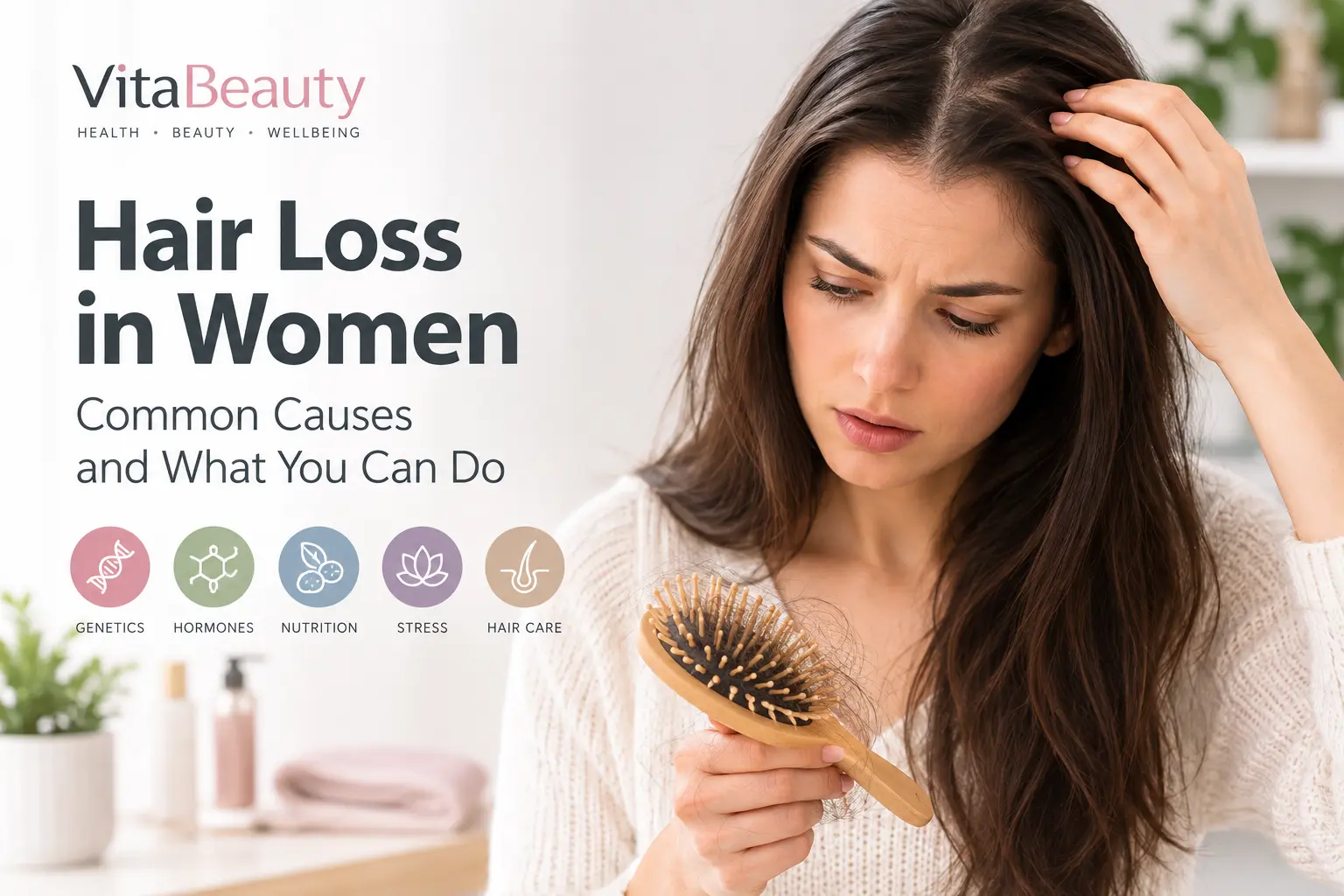
Hair Loss in Women: Common Causes and What You Can Do
Hair loss in women can be worrying, especially when you start noticing more hair than usual on your brush, pillow or in the shower. While some daily hair shedding is completely normal, persistent thinning or noticeable changes in hair density may have a variety of causes.
The good news is that female hair loss does not always mean permanent hair loss. Hair shedding can occur after periods of stress, illness, hormonal changes, nutritional problems or certain medications. Other forms of hair loss may be linked to genetics or specific scalp conditions and may require professional assessment.
Understanding hair loss in women, recognising the signs and identifying possible causes are important first steps towards choosing an appropriate approach to hair and scalp care.
In this guide, we explore common causes of female hair loss, signs to look out for, everyday hair-care tips, nutritional considerations and when it may be appropriate to speak with a healthcare professional.
Is Hair Shedding Normal?
Yes. Losing some hair every day is part of the normal hair-growth cycle.
The American Academy of Dermatology notes that losing around 50 to 100 hairs a day can be normal because old hairs are continuously shed as part of the natural cycle. However, noticeable changes such as a widening part, bald patches or overall thinning can indicate hair loss rather than normal shedding.
The amount of hair you see in your brush or shower can also vary depending on how often you wash and brush your hair.
What matters is not necessarily the exact number of hairs you lose, but whether you notice a persistent change in your usual hair density or shedding pattern.
Common Signs of Hair Loss in Women
Female hair loss can appear differently from one person to another.
Some common signs include:
- A widening parting
- A thinner-looking ponytail
- Increased hair shedding
- Overall thinning across the scalp
- More visible scalp than usual
- Thinning around the temples
- Noticeably reduced hair density
- Small or clearly defined bald patches
- Hair that breaks more easily than before
Female pattern hair loss commonly appears as gradual thinning around the top of the scalp and a widening central part. It can develop progressively, although not every woman experiences the same pattern.
If you notice sudden or significant changes, it is worth considering what may have changed recently in your health, lifestyle, diet, medication or hair-care routine.
Common Causes of Hair Loss in Women
There is no single cause of female hair loss. Hair can become thinner or shed more heavily for many different reasons.
1. Genetics and Female Pattern Hair Loss
Genetics can play an important role in hair thinning.
Female pattern hair loss, also known as female pattern hair loss or androgenetic alopecia, is one of the common forms of hair loss in women. It often develops gradually and may become more noticeable with age.
One of the typical signs is a widening part or thinning across the top of the scalp.
Because several conditions can produce similar symptoms, a healthcare professional or dermatologist can help determine whether genetic hair loss is actually the cause.
2. Stress and Temporary Hair Shedding
Periods of significant physical or emotional stress can sometimes be followed by increased hair shedding.
This type of shedding can occur after events such as:
- Significant illness
- High fever
- Major surgery
- Severe stress
- Rapid weight loss
- Major changes in diet
The important thing to remember is that hair changes may not happen immediately after the stressful event. Increased shedding can sometimes become noticeable later.
If you experience persistent or significant shedding, identifying the underlying cause is more useful than simply treating the hair itself.
3. Hormonal Changes
Hormonal changes can affect the hair-growth cycle.
Women may notice changes in hair density during different stages of life, including pregnancy, after childbirth, perimenopause and menopause.
Certain hormonal conditions can also contribute to hair thinning. For example, hormonal imbalances associated with conditions such as polycystic ovary syndrome (PCOS) may be linked with hair loss.
If hair loss occurs alongside other significant hormonal symptoms, discussing the changes with a healthcare professional may be appropriate.
4. Nutritional Deficiencies
Your hair needs adequate nutrition to grow normally.
A restricted diet or nutritional deficiency may contribute to hair problems in some people. Nutrients that can be relevant to hair health include iron, zinc, protein and certain vitamins.
However, taking high-dose supplements without knowing whether you actually have a deficiency is not necessarily helpful.
The American Academy of Dermatology recommends using supplements such as iron, zinc or biotin when testing indicates a deficiency, because excessive amounts of some nutrients can cause health problems and, in certain circumstances, may even contribute to hair loss.
If you suspect your diet may be affecting your hair, speak with a healthcare professional before starting high-dose supplements.
5. Tight Hairstyles and Traction
Your hairstyle can also affect hair health.
Regularly wearing very tight ponytails, buns, braids or other styles that continuously pull on the scalp can cause a type of hair loss known as traction alopecia.
To reduce unnecessary tension:
- Avoid wearing very tight hairstyles every day.
- Change hairstyles regularly.
- Avoid excessive pulling when brushing.
- Choose softer hair ties where possible.
- Give your scalp breaks from styles that create tension.
Long-term traction can sometimes result in permanent hair loss, so reducing repeated tension early is important.
6. Hair Damage and Breakage
Not all visible hair loss is actually hair coming out from the root.
Hair can also become damaged and break because of:
- Frequent heat styling
- Excessive bleaching
- Chemical treatments
- Aggressive brushing
- Tight hairstyles
- Excessive friction
Breakage often leaves shorter pieces of hair and uneven-looking ends, while shedding from the root can result in longer hairs with a bulb at one end.
The two can also happen at the same time.
A gentle hair-care routine can help minimise unnecessary mechanical and chemical damage.
7. Medical Conditions and Medications
Certain medical conditions and medications can also contribute to hair loss.
Examples can include some thyroid conditions, autoimmune disorders, scalp conditions and treatments such as chemotherapy.
Because the causes are so varied, unexplained hair loss should not automatically be assumed to be a vitamin deficiency or genetic hair loss.
A proper assessment can help identify the most appropriate next step.
Hair Loss vs Hair Breakage: What’s the Difference?
Understanding the difference between shedding and breakage can make it easier to choose the right hair-care approach.
Hair shedding
Hair shedding occurs when a hair completes its natural growth cycle and falls from the scalp.
You may notice longer strands in your brush, shower or on clothing.
Hair breakage
Breakage occurs when the hair shaft snaps.
You may notice:
- Short broken hairs
- Uneven lengths
- Split ends
- Frizzy or damaged-looking areas
If your main problem is breakage, reducing heat, chemical processing, friction and tight hairstyles may be more useful than focusing exclusively on hair-growth supplements.
How to Care for Thinning Hair
A good hair-care routine cannot solve every cause of hair loss, but it can help reduce unnecessary damage and support healthier-looking hair.
Choose Gentle Hair Care
Use products that suit your scalp and hair type.
Avoid excessive washing if it leaves your scalp uncomfortable, but remember that keeping the scalp clean is still an important part of general hair care.
Reduce Excessive Heat
Frequent high-temperature styling can damage the hair shaft.
When possible:
- Reduce the temperature of styling tools.
- Avoid using heat every day.
- Allow hair to dry naturally when practical.
- Use appropriate heat protection when styling.
Be Gentle When Brushing
Wet hair can be more vulnerable to mechanical damage.
Use a gentle brushing technique and avoid aggressively pulling through knots.
Start from the ends and gradually work towards the roots when detangling.
Avoid Constant Tension
If your hairstyle pulls on your scalp, change it regularly.
A comfortable hairstyle that does not create constant tension can help reduce unnecessary stress on the hair and scalp.
Can Hair Supplements Help?
Hair supplements are widely available and often contain combinations of vitamins, minerals, amino acids or botanical ingredients.
However, supplements should not automatically be considered a treatment for every type of hair loss.
If hair loss is caused by a nutritional deficiency, correcting that deficiency may be relevant. If the cause is genetic, hormonal or related to another medical condition, a supplement alone may not address the underlying issue.
The American Academy of Dermatology also cautions that taking excessive amounts of certain nutrients can be harmful.
This is why it is sensible to check the nutritional information, follow the manufacturer’s recommended intake and speak with a healthcare professional if you have concerns about deficiencies, medication interactions or persistent hair loss.
For shoppers looking for hair and beauty supplements, Vita Beauty offers a range of products in its Hair Care and Hair Loss Supplements categories.
You can explore the Hair Care collection to compare available products.
What About Hair Growth Products?
There are different types of products marketed towards people concerned about thinning hair.
These can include:
- Hair supplements
- Shampoos and conditioners
- Scalp-care products
- Topical treatments
- Hair-strengthening products
The right option depends on the reason for the hair changes.
For example, some shampoos may help hair look fuller or reduce breakage, but they should not automatically be expected to regrow hair.
For certain types of female pattern hair loss, treatments such as topical minoxidil may be recommended by healthcare professionals. The American Academy of Dermatology identifies minoxidil as a commonly recommended treatment for female pattern hair loss, but suitability and potential side effects should be discussed with an appropriate healthcare professional.
When Should You See a Doctor About Hair Loss?
It is a good idea to seek professional advice if your hair loss is:
- Sudden
- Severe
- Rapidly worsening
- Occurring in clearly defined patches
- Associated with scalp inflammation or pain
- Accompanied by other unexplained symptoms
- Continuing without an obvious explanation
You should also consider professional advice if you are concerned about a widening part or progressive thinning.
A dermatologist can assess your scalp and hair and help determine whether the problem is related to female pattern hair loss, temporary shedding, breakage, a nutritional issue or another condition.
The American Academy of Dermatology emphasises that identifying the underlying cause is an important part of managing hair loss.
How to Support Healthy Hair Every Day
While there is no single routine that works for every woman, several basic habits can help maintain healthier-looking hair.
Eat a balanced diet
Try to include a variety of protein-rich foods, vegetables, fruits, whole grains and other nutrient-dense foods.
Handle hair gently
Minimise unnecessary pulling, aggressive brushing and repeated high-heat styling.
Look after your scalp
Keep your scalp clean and pay attention to persistent itching, redness, scaling or discomfort.
Avoid unnecessary supplementation
More vitamins do not automatically mean healthier hair. If you suspect a deficiency, professional advice and appropriate testing can be more useful than taking multiple supplements without guidance.
Pay attention to changes
Taking occasional photographs of your parting or hairline under similar lighting can help you notice gradual changes that may otherwise be difficult to recognise.
Final Thoughts
Hair loss in women can have many different causes, from genetics and hormonal changes to stress, nutritional problems, hair damage and certain medical conditions.
The most important first step is to understand what may be causing the change rather than assuming that every type of hair loss requires the same solution.
A gentle hair-care routine, balanced nutrition and avoiding excessive tension or damage can support healthier-looking hair. If you experience persistent, sudden or unexplained hair loss, professional assessment can help identify the cause and guide you towards appropriate treatment options.
Hair supplements may have a role for some people, particularly when nutritional needs are identified, but they should not be viewed as a universal solution for female hair loss.
For hair-care products and beauty supplements available in the UK, explore the Vita Beauty Hair Care collection.
Frequently Asked Questions
What is the most common cause of hair loss in women?
Female pattern hair loss is a common cause of progressive thinning in women. However, women can experience hair loss for many different reasons, including hormonal changes, stress, nutritional deficiencies, medical conditions and hair-care practices.
Is it normal for women to lose hair every day?
Yes. Some daily shedding is normal. The American Academy of Dermatology states that losing approximately 50 to 100 hairs per day can be part of the normal hair-growth cycle. Persistent thinning, bald patches or significant changes in shedding may require further assessment.
Can stress cause hair loss in women?
Significant physical or emotional stress can be followed by increased hair shedding in some women. If shedding continues or is severe, it is important to consider other possible causes as well.
Can vitamins stop hair loss?
Vitamins can be important for normal health, including healthy hair, but supplements are not a universal treatment for hair loss. If a deficiency is identified, correcting it may be appropriate. High-dose supplementation without a known deficiency is not recommended.
Does biotin help with hair loss?
Biotin is an important nutrient, but evidence does not support taking high-dose biotin as a universal solution for hair loss in people who are not deficient. If you suspect a nutritional deficiency, speak with a healthcare professional.
How can I reduce hair breakage?
You can reduce unnecessary breakage by limiting excessive heat and chemical treatments, brushing gently, avoiding tight hairstyles and handling wet hair carefully.
Can female hair loss be treated?
Some forms of female hair loss can be treated or managed, but the appropriate approach depends on the underlying cause. A dermatologist or other healthcare professional can help determine the cause and suitable treatment options.
When should I see a doctor about hair loss?
Consider seeking professional advice if hair loss is sudden, severe, rapidly progressing, occurs in patches or is accompanied by scalp symptoms or other unexplained changes.
Medical Disclaimer: This article is for general informational purposes only and does not replace professional medical advice, diagnosis or treatment. If you are concerned about hair loss, speak with a qualified healthcare professional.


