







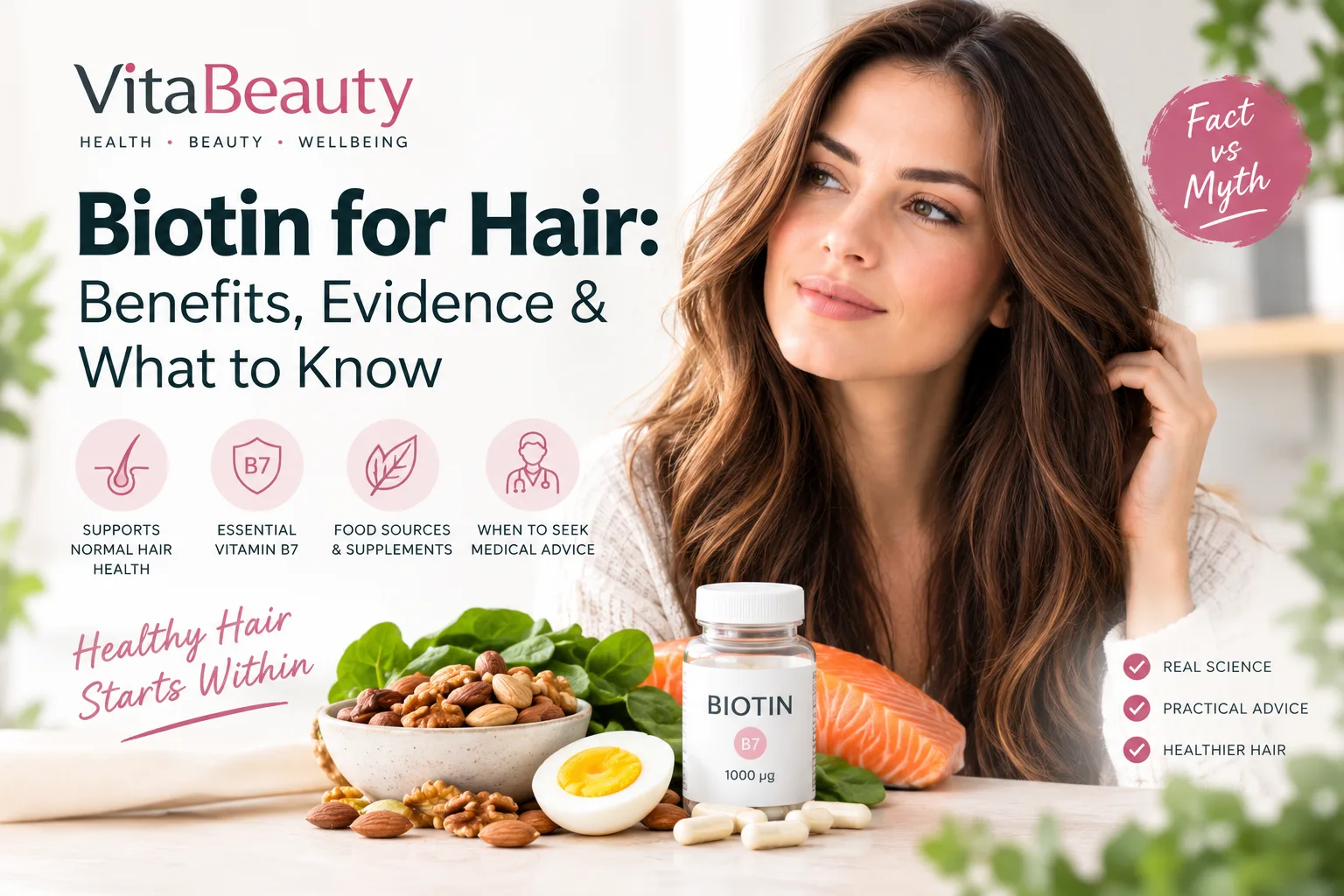
Biotin for Hair: Benefits, Evidence & What to Know
Biotin is often promoted as a must-have nutrient for stronger hair, healthier nails and improved hair growth. You may have seen biotin supplements marketed to people experiencing thinning hair or excessive shedding. But does biotin really help your hair grow, and is taking a supplement necessary?
The answer depends on your nutritional status and the reason behind your hair concerns. Biotin, also known as vitamin B7, plays an important role in normal metabolism. However, the scientific evidence supporting biotin supplements for hair growth in otherwise healthy people remains limited.
In this guide, we explain what biotin does, how it relates to hair health, which foods contain it, what to consider before taking a supplement and when hair loss deserves professional attention.
What Is Biotin?
Biotin is a water-soluble B vitamin that helps your body convert carbohydrates, fats and proteins from food into energy. It also supports several processes involved in normal cellular function.
Because hair follicles rely on nutrients to function normally, biotin has become a popular ingredient in hair, skin and nail supplements. However, a nutrient being essential for normal health does not automatically mean that taking extra amounts will improve hair growth.
Most people obtain sufficient biotin through a varied diet. According to the US National Institutes of Health Office of Dietary Supplements, the adequate intake for adults aged 19 and older is 30 micrograms per day. This is a general nutritional reference, not a recommended treatment dose for hair loss.
Does Biotin Help Hair Growth?
Biotin contributes to normal bodily functions, and severe biotin deficiency can cause hair thinning or hair loss. The important question is whether taking additional biotin helps people who already have enough.
At present, there is not strong clinical evidence that biotin supplements increase hair growth in healthy people who do not have a deficiency. A 2024 review of studies investigating biotin for hair loss found that high-quality evidence supporting its use was lacking.
This means biotin should not be considered a guaranteed solution for thinning hair, a receding hairline or ongoing shedding.
When Might Biotin Be Helpful?
Biotin supplementation may be relevant when a healthcare professional identifies a deficiency or a specific condition that affects biotin status. In such cases, correcting the deficiency may help address symptoms associated with it.
However, hair loss can have many other causes, including:
- Hereditary hair loss.
- Hormonal changes.
- Significant stress or illness.
- Iron deficiency or other nutritional problems.
- Thyroid conditions.
- Certain medications.
- Hair breakage caused by heat, chemicals or tight hairstyles.
If you are experiencing persistent hair loss, identifying the underlying cause is more useful than automatically starting a high-dose supplement.
For a broader overview, read our guide to why hair may be falling out.
Signs of Biotin Deficiency
Biotin deficiency is uncommon in people who eat a balanced diet, but it can occur in certain circumstances.
Possible signs include:
- Thinning hair or hair loss.
- Brittle nails.
- Skin rashes, particularly around the eyes, nose and mouth.
- Other symptoms affecting the nervous system in more severe cases.
These symptoms are not specific to biotin deficiency. Hair loss and brittle nails, for example, can have several different explanations.
Do not assume that you have a deficiency based on your hair alone. A healthcare professional can assess your symptoms, medical history, diet and any relevant tests to determine whether further investigation is needed.
Foods That Contain Biotin
A varied diet can provide biotin alongside other nutrients that support normal health. Before considering a supplement, it is worth reviewing the foods you regularly eat.
Common dietary sources include:
1. Eggs
Eggs provide several nutrients, including biotin. Cooking egg whites is important because raw egg whites contain avidin, a protein that can interfere with biotin absorption when consumed regularly in large amounts.
2. Nuts and Seeds
Nuts and seeds can contribute biotin, healthy fats and other nutrients to a balanced eating pattern. Almonds, peanuts and sunflower seeds are practical options for snacks or meals.
3. Fish and Meat
Fish, meat and organ meats such as liver can provide biotin. They also supply other nutrients, although the nutritional profile varies by food and preparation method.
4. Vegetables
Some vegetables, including sweet potatoes, spinach and broccoli, contain biotin and can help add variety to your diet.
5. Other Foods
Egg yolks and some dairy products can also contribute to your overall intake. Eating a varied selection of foods is generally more useful than relying on a single ingredient.
Remember that adequate biotin intake is only one part of nutrition. Hair health can also be affected by overall energy intake, protein, iron and other nutrients, as well as genetics and medical conditions.
For more information, explore our related guide to vitamins for hair growth.
Biotin Supplements: What Should You Know?
Biotin supplements are available as standalone products and as ingredients in multivitamins or hair, skin and nail formulas. Products may contain amounts substantially higher than the adult adequate intake.
A higher dose does not necessarily mean a better result. If you already obtain enough biotin, additional supplementation may not improve your hair.
Before choosing a supplement, consider the following.
Check the Ingredient List
Look at the amount of biotin per serving and review the full ingredient list. Some formulas contain several vitamins, minerals or other ingredients, so it is important to understand what you are taking.
Consider Your Actual Needs
A supplement may be unnecessary if your diet already provides sufficient biotin. If you suspect a nutritional deficiency, speak with a qualified healthcare professional rather than self-diagnosing.
Follow the Product Instructions
Do not exceed the recommended serving on the product label unless a healthcare professional specifically advises you to do so.
Tell Your Healthcare Professional Before Blood Tests
An important safety consideration is that high-dose biotin can interfere with certain laboratory tests, including some tests used to measure thyroid hormones. This interference can produce misleading results.
Tell your doctor or laboratory team if you take a biotin supplement, especially before blood tests. Ask them whether you need to pause it and, if so, for how long. Do not stop prescribed treatment without professional advice.
For a wider comparison of supplement ingredients, read our guide to hair growth supplements and the ingredients to look for.
How to Choose a Hair Supplement
There is no single supplement that suits everyone experiencing hair concerns. The most appropriate choice depends on your diet, health, the product’s formulation and the reason for your symptoms.
When comparing products, consider these factors:
- Transparent labelling: Choose products that clearly state their ingredients and quantities.
- Suitable formulation: Check whether the product contains nutrients you actually need.
- Directions for use: Follow the manufacturer’s instructions and relevant professional advice.
- Safety information: Check warnings, interactions and suitability for your circumstances.
- Realistic expectations: Be cautious of products promising rapid, guaranteed or permanent hair regrowth.
You can browse the Vita Beauty Hair Care collection to review available products and their ingredient information. Always check the current product label and description before purchasing.
Remember that supplements are not a substitute for diagnosing and treating the cause of hair loss. A product containing biotin should not automatically be considered more effective than another product simply because it includes this vitamin.
Biotin vs Other Causes of Hair Thinning
Hair thinning is not always caused by a lack of nutrients. Understanding the difference between shedding, breakage and progressive thinning can help you decide what to investigate next.
Hair Shedding
Hair shedding involves hairs coming out from the scalp. It may become noticeable after illness, major stress, childbirth or other changes. Some causes are temporary, while others require assessment.
Hair Breakage
Hair breakage occurs when the hair shaft snaps rather than falling out from the root. Heat styling, chemical treatments, friction and tight hairstyles can contribute.
Read our guide to hair loss vs hair breakage to understand the differences.
Gradual Thinning
Gradual thinning may be related to hereditary or hormonal factors, among other causes. In these situations, taking biotin without addressing the underlying issue may not solve the problem.
If your hair care habits may be contributing to damage, our guide to a hair care routine for thinning hair explains practical ways to care for fragile hair and reduce avoidable breakage.
When Should You Seek Professional Advice?
Consider speaking with a GP or another qualified healthcare professional if:
- Hair loss is sudden, severe or persistent.
- You notice bald patches or a widening area of thinning.
- Your scalp is painful, inflamed, itchy or unusually scaly.
- Hair loss occurs alongside other unexplained symptoms.
- You suspect a nutritional deficiency or a medication may be contributing.
- You are considering high-dose supplements or taking several products with overlapping ingredients.
A professional can help identify possible causes and decide whether examination, blood tests or other treatment is appropriate.
If you are concerned about your symptoms, start with our overview of common causes of hair loss in women.
Frequently Asked Questions
Does biotin make hair grow faster?
There is not enough high-quality evidence to conclude that biotin supplements make hair grow faster in people who are not deficient. Correcting a confirmed deficiency may be helpful, but results depend on the underlying cause.
How much biotin should I take for hair growth?
There is no established biotin dose proven to promote hair growth in otherwise healthy adults. The general adequate intake for adults is 30 micrograms daily, but this is a nutritional reference rather than a hair-growth treatment recommendation. Follow professional advice and the product label.
Can biotin stop hair loss?
Biotin is not a proven universal treatment for hair loss. Although deficiency can cause hair changes, many other conditions can lead to shedding or thinning. Identifying the cause is important.
Which foods are rich in biotin?
Foods containing biotin include eggs, nuts, seeds, fish, meat and certain vegetables. A varied diet can help provide this vitamin alongside other essential nutrients.
Are high-dose biotin supplements safe?
High-dose biotin can interfere with certain laboratory tests and lead to misleading results. Tell your healthcare professional about any supplements you take, particularly before blood testing.
How long does biotin take to work on hair?
There is no reliable, universal timeline for hair improvement from biotin supplementation. If hair loss is caused by something other than biotin deficiency, taking extra biotin may not help.
Should I take biotin if my hair is thinning?
Not necessarily. Hair thinning has many possible causes, and biotin deficiency is uncommon. Consider your diet and symptoms, and seek professional advice if the problem persists or worsens.
Final Thoughts
Biotin is an essential B vitamin that supports normal metabolism, and a severe deficiency can contribute to hair loss. However, current evidence does not establish that taking extra biotin improves hair growth in most healthy people.
A balanced diet, gentle hair care and an appropriate assessment of persistent hair loss are more useful starting points than assuming that a supplement will solve the problem. If you are considering biotin, check the ingredients, follow the product directions and discuss high-dose supplements with a healthcare professional.
Medical disclaimer: This article is for general educational purposes only and is not a substitute for individual medical advice, diagnosis or treatment.


